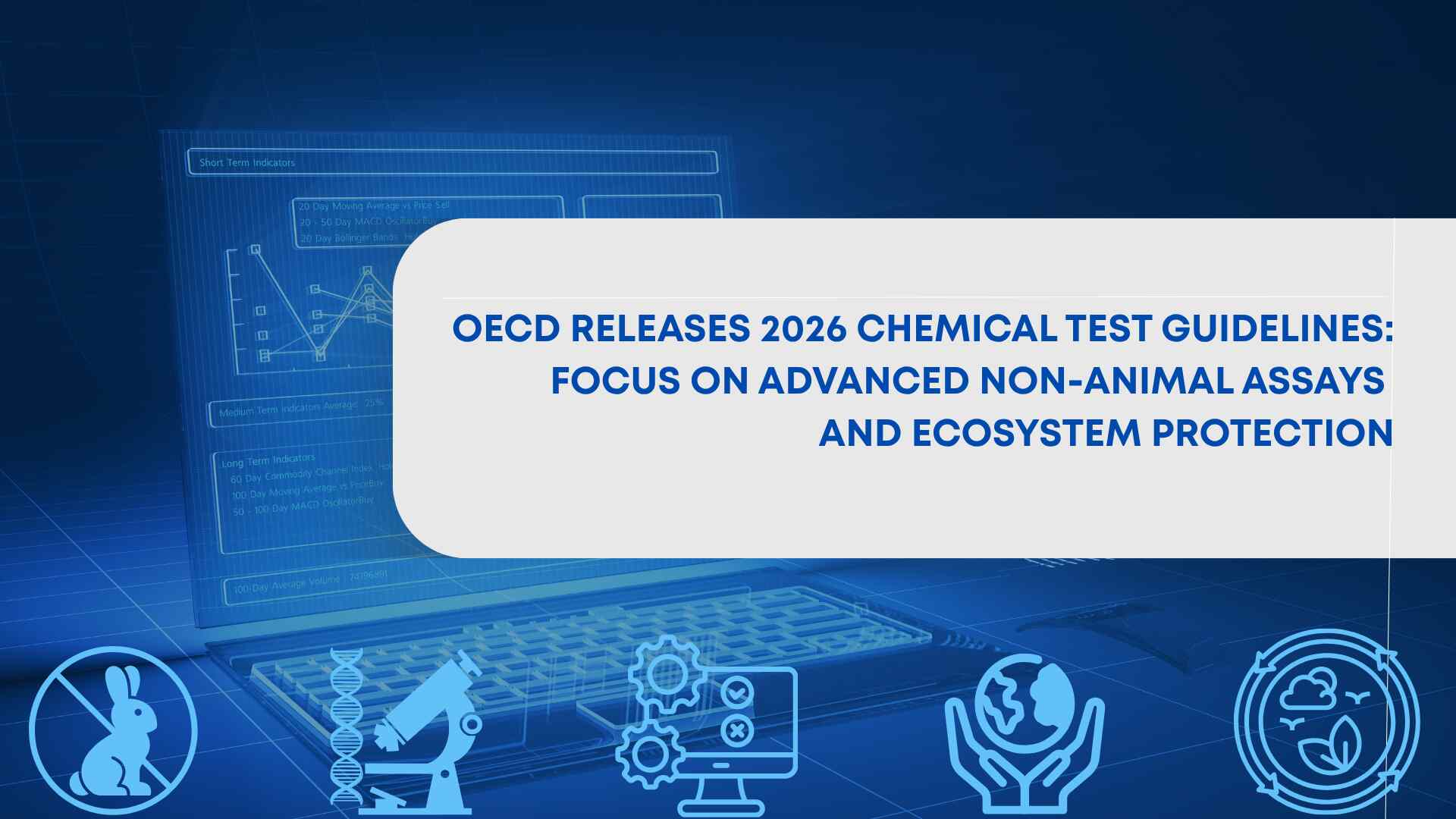

The Organisation for Economic Cooperation and Development (OECD) today announced the publishing of new and updated Test Guidelines, a significant step towards improving chemical testing techniques worldwide. OECD Chemical Testing Guidelines 2025 updates which are available in both English and French, demonstrate the OECD’s commitment to aligning testing practices with the most recent scientific advances, promoting best practices in chemical assessment, and adhering to the “3Rs Principles” of replacement, reduction, and refinement of animal experimentation. The new criteria guarantee that data generated is generally accepted across all member and adhering countries, facilitating international regulatory collaboration.
OECD Chemical Testing Guidelines 2025 for solitary bee testing is introduced!
A significant addition to the OECD’s robust framework is Test Guideline No. 254: Mason bees (Osmia sp.), Acute Contact Toxicity Test. This new guideline addresses the critical need for assessing the acute contact toxicity of chemicals on mason bees, a vital pollinator species. This test guideline specifies a laboratory test procedure for determining the acute contact toxicity of test substances on adult solitary bees. It is mostly based on the OECD recommendations for chemical testing (214 and 246).
This introduction reflects growing global concern for pollinator health and the environment, providing a standardized method for evaluating potential impacts.
Developing Omics Analysis and In Vitro Methods
Several current Test Guidelines have been revised to allow for the collection of tissue samples for omics analysis, a cutting-edge method that provides a more in-depth knowledge of biological reactions to chemical exposure. This includes:
Test No. 203: Fish, Acute Toxicity Test
Test No. 210: Fish, Early-life Stage Toxicity Test
Test No. 236: Fish Embryo Acute Toxicity (FET) Test
Test No. 407: Repeated Dose 28-day Oral Toxicity Study in Rodents
Test No. 408: Repeated Dose 90-Day Oral Toxicity Study in Rodents
Test No. 421: Reproduction/Developmental Toxicity Screening Test
Test No. 422: Combined Repeated Dose Toxicity Study with the
Reproduction/Developmental Toxicity Screening Test
Furthermore, the OECD maintains its efforts to reduce animal testing with changes that allow for greater use of in vitro and in chemico procedures. Test Guideline No. 497, which focusses on Skin Sensitisation, now includes these approaches as additional sources of information and proposes a new Defined Approach for establishing the point of departure. Similarly, Test Guideline No. 491, which refers to Short Time Exposure In Vitro Test Methods for Eye Irritation, has been revised to accommodate the STE 0.5 variant.
Refinements in Toxicity and Environmental Testing
Other important modifications include:
Test No. 467: Defined Approaches for Serious Eye Damage and Eye Irritation has been modified to add a new Defined Approach for Surfactant Chemicals.
Test No. 239: Water-Sediment Myriophyllum Spicatum Toxicity Test has been improved to clarify analytical requirements, calculations, and statistical analyses.
Tests 431 and 439, which deal with in vitro skin corrosion and irritation, respectively, have been amended to remove the EpiSkin TM model due to its commercial unavailability, ensuring that the guidelines remain realistic and up to date.
Test No. 444A: In Vitro Immunotoxicity IL-2 Luc and Il-2 Luc LTT Assays, utilising an upgraded IL-2 Luc assay variation.
Test No. 437: Bovine Corneal Opacity and Permeability Test Method now provides more information on the use of ocular histology.
Test No. 442B: Skin Sensitisation: Local Lymph Node Assay: BrdU-ELISA or -FCM has been amended to include a sub-categorization criterion.
Test No. 443: Extended One-Generation Reproductive Toxicity Study, which clarifies endpoints related to endocrine disrupters and measures developmental immunotoxicity.
Test No. 442C: Chemico Skin Sensitisation: Assays have been revised to accommodate borderline ranges.
Test No. 456: H295R Steroidogenesis Assay, confirming findings are consistent with revised data interpretation techniques.
Test Nos. 470 and 488, on Mammalian Erythrocyte Pig-a Gene Mutation and Transgenic Rodent Somatic and Germ Cell Gene Mutation Assays, have been amended to explain the use of historical control data.
Test 506: Stability of Pesticide Residues in Stored Commodities, modified based on application experience.
In addition, numerous recommendations were modified for radioactive labelling location (Test Nos. 111, 307, 308, 316) and general adjustments (Test No. 492).
The Global Standard for Chemical Testing
The OECD Chemical Testing Guidelines 2025 are widely regarded as the gold standard for chemical testing, with governments, industry, and independent laboratories using them to ensure regulatory compliance. Their continual upgrades guarantee that they reflect cutting-edge scientific breakthroughs and changing regulatory expectations, making them essential for chemical notification and registration processes across the world.
The OECD’s most recent publication emphasises its critical role in creating a standardised approach to chemical safety assessment, encouraging testing innovation, and protecting both human health and the environment.