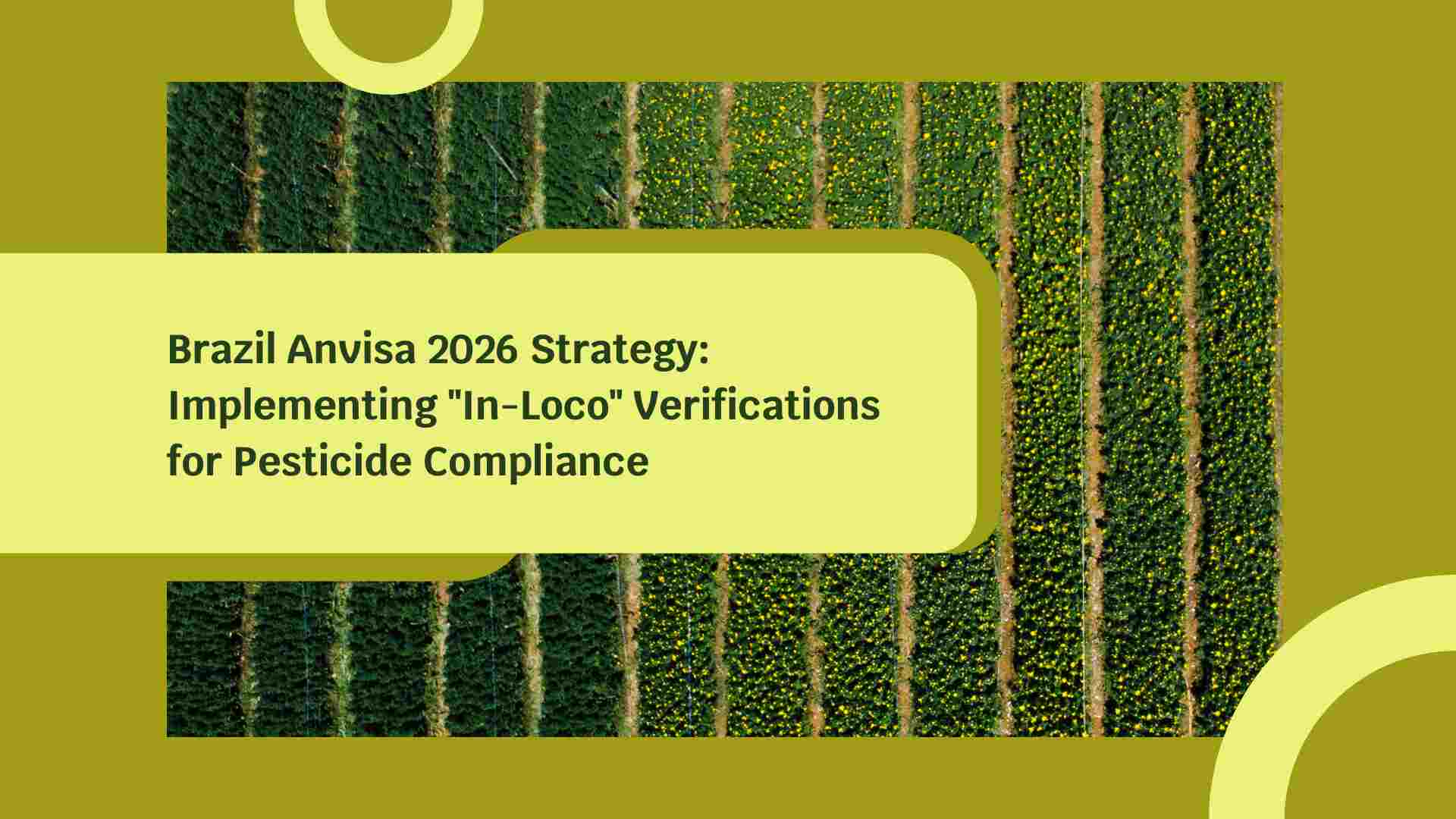
Brazil Anvisa 2026 Strategy: The National Health Surveillance Agency, or Anvisa, has formally introduced a novel plan to update the toxicological assessment of pesticide products, marking a significant turning point for Brazil’s agricultural and health industries. By combining “optimized analysis” with on-site technical visits, the agency hopes to save wait times and strengthen safety measures.
On-Site Verification: A New Era of Oversight
Anvisa leaves the office for the first time and enters the factory. The agency just concluded its first technical inspection of Nortox in Arapongas.
Instead of relying simply on digital paperwork, inspectors are increasingly validating manufacturing processes in situ (on-site) to ensure they match the data supplied during registration. This ensures that the information on paper accurately reflects the reality of the chemicals being manufactured.
Efficiency Gains: 75% Reduction in Queues
The new strategy’s success is based on Collegiate Board Resolution (RDC) 950/2024. Since its implementation, Anvisa has:
• Conducted roughly 750 toxicology evaluations.
• Reduced the backlog for formulated products by 75 percent.
By automating and optimizing documentation reviews using the FLORA (Optimized Reading Tool) and DCIPA (Declaration of Pesticide Hazard Information), the agency can focus on high-priority post-market monitoring.
Brazil Anvisa 2026 Strategy: Expanding
On January 2, 2026, Anvisa’s Collegiate Board approved RDC 1,005/2025, citing the enormous success of the original launch. This extension uses the same optimized analysis for
developed items from non-equivalent technological products and registered active compounds require new formulations.
Deadlines for Companies
To remain compliant with Brazil Anvisa 2026 strategy, organizations must use the new reporting tools for both new and existing registration requests.
Companies have until July 2, 2026, to submit FLORA and DCIPA forms using the Solicita System.
Anvisa cautions that “optimized” does not equal “relaxed.” The agency reserves the right to examine any judgment if contradictions are discovered in the data. This hybrid approach—fast-tracking clear cases while conducting physical audits—is intended to establish a more robust regulatory environment that protects public health while not impeding industry efficiency.