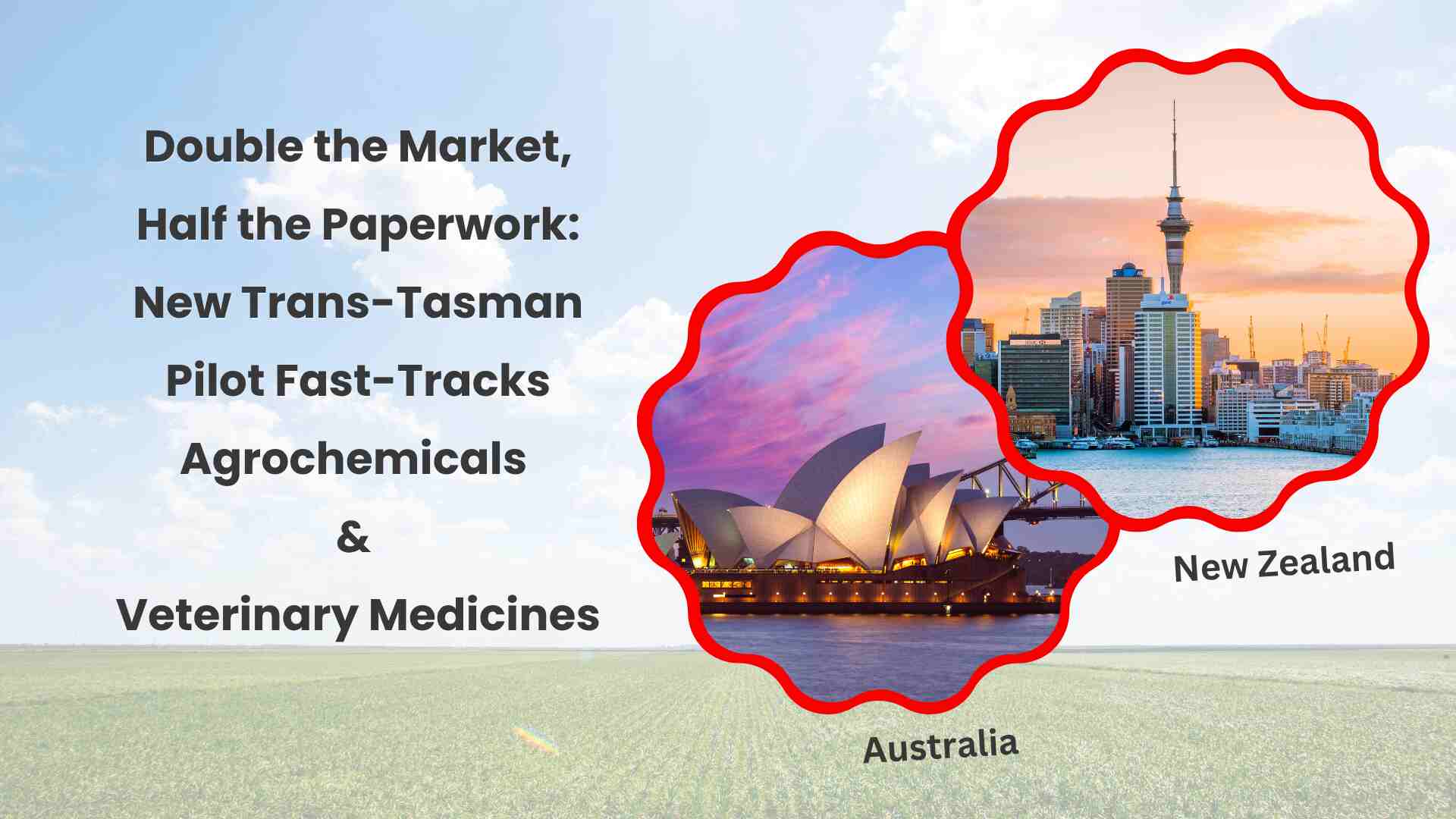
In a significant step toward reducing red tape for the trans-Tasman primary sector, Australian and New Zealand regulators have officially established a trans-Tasman joint agrochemical registration program that allows for the joint registration of agricultural chemicals and veterinary medications.
New Zealand Food Safety (NZFS) and the Australian Pesticides and Veterinary Medicines Authority (APVMA) announced a trans-Tasman joint agrochemical registration on March 31, 2026, inviting producers to apply for a streamlined pathway that targets both markets at the same time.
What is the Trans-Tasman market?
The Trans-Tasman market refers to Australia and New Zealand’s unique, closely integrated economic relationship, which is defined by the free flow of products, services, and people over the Tasman Sea. This relationship is based on the Closer Economic Relations (CER) agreement and the Trans-Tasman Mutual Recognition Arrangement (TTMRA), which aim to create a “single economic market” by matching regulatory standards and removing trade barriers.
One Process, Two Markets
The pilot’s goal is to change the way new products reach farmers and veterinarians by eliminating the need for duplicate applications. The new approach will allow the two agencies to share scientific assessments, greatly decreasing the administrative burden on industry.
New Zealand Food Safety Deputy Director-General Vincent Arbuckle explained the move’s economic impact – “By streamlining the registration process… we are working to remove obstacles for the primary sectors and the communities that depend on them. This closer collaboration is a significant step and will be a blueprint for future agreements.”
According to APVMA Chief Executive Officer Scott Hansen, the two nations are natural partners due to shared regulatory standards. “It makes sense for us to increase the scope of our teamwork to position Australia and New Zealand as an attractive region for new product launches and innovation,” Hansen stated.
The APVMA and New Zealand Food Safety are formally seeking expressions of interest from manufacturers looking to shorten their regulatory process. This pilot program is primarily intended for:
- Companies are introducing entirely new items for simultaneous distribution in Australia and New Zealand.
- Companies that have already registered in one country and want to use that information to enter the other country more quickly.
Manufacturers who participate have a direct say in how a harmonized regulatory system is shaped, and regulators use these real-world examples to refine shared-assessment procedures for a long-term trans-Tasman framework. A new Memorandum of Understanding (MoU) signed on November 24, 2025, provides the basis for this cooperation. The goal of the agreement was to strengthen “acceptance and reliance” on each other’s scientific evidence, guaranteeing that safety and efficacy standards would not be compromised even though the process would be quicker.
Due to the similarities between the two countries’ agricultural systems and biosecurity issues, industry stakeholders have long advocated for such a move.