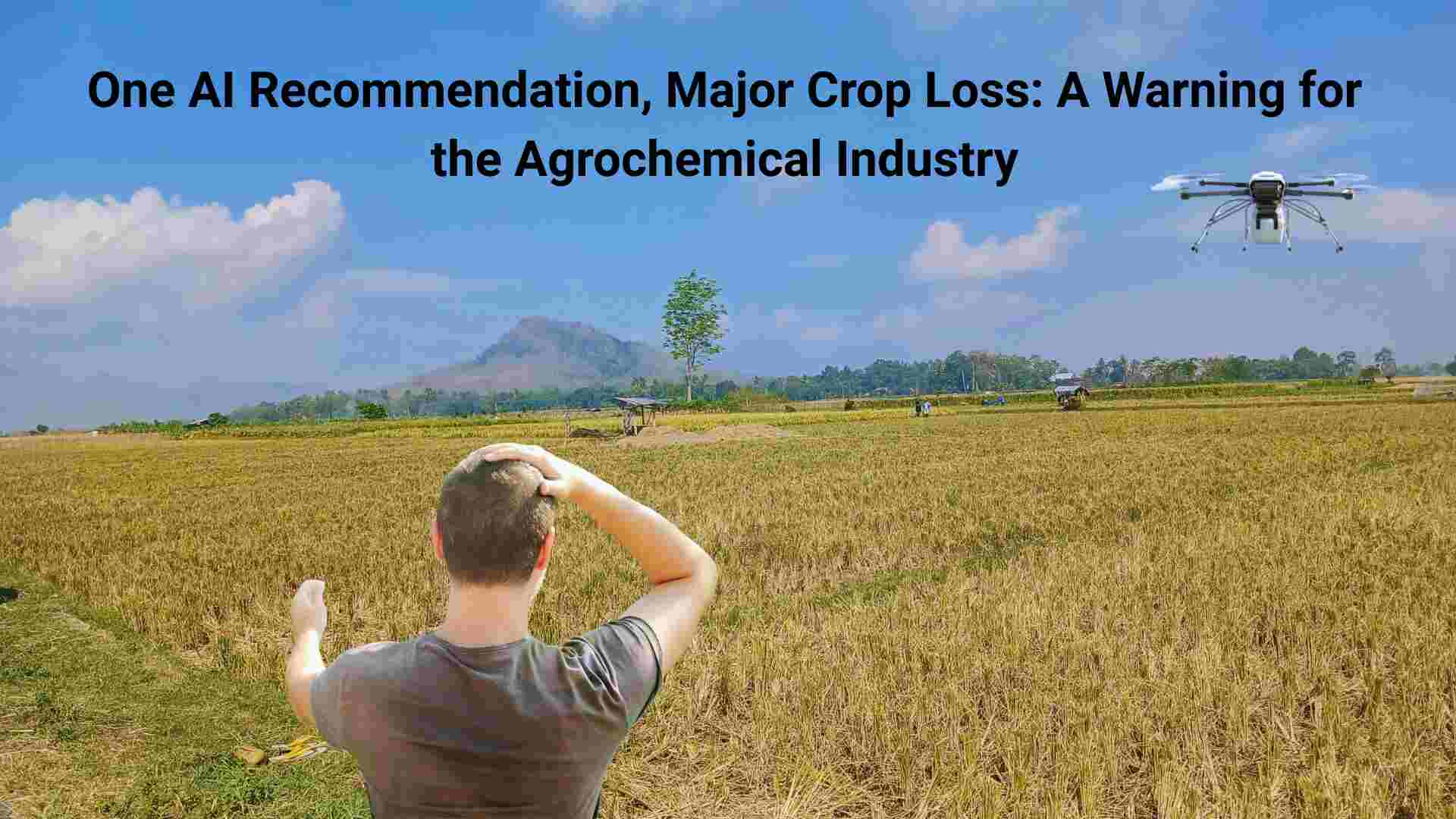
A recent occurrence in Anhui Province, China, demonstrates the risks of depending only on AI-generated pesticide recommendations. A 67-year-old farmer reportedly lost around 150 mu (about 24.7 acres) of sesame crop after implementing a pesticide regimen developed by an AI application. The farmer had apparently been using the AI application for over a year to get recommendations on farming methods including fertilizer and pesticide use. On July 10, 2026, he sought the application for weed and pest management tips in his sesame field. The AI reportedly proposed a pesticide program that included Haloxyfop-P-methyl, Fomesafen, thiamethoxam, and Emamectin benzoate. The farmer took the advice and utilized a drone to spray the entire field.
The sesame plants withered and perished the next day, according to reports. The farmer calculated his loss at about RMB 150,000. When he asked the AI application what could have caused the damage, the system reportedly suggested Fomesafen as a likely culprit. However, by that point, the pesticide mixture had been spread throughout the entire field.
Why Regulatory Consultants Matter in the Age of AI: The AI apparently proposed a combination of herbicides and insecticides, which the farmer used to spray the entire field with a drone. The sesame plants withered and perished the next day, according to reports. The AI eventually identified one of the recommended pesticides as a potential culprit.
This incident highlights an important lesson: AI can support agricultural decision-making, but it should not replace regulatory and technical expertise.
Crop stage, target pest, application rate, product registration, label requirements, tank-mix compatibility, local legislation, and environmental variables all need to be considered while using pesticides. These variables may not be accurately examined by a general AI tool.
Smart AI techniques can be useful for research and preliminary evaluation, but final conclusions should be validated by reputable regulatory experts and trained agriculture professionals. Their advice is especially useful when establishing pesticide programs, farm mapping, and agricultural setups, as it helps ensure that recommendations are technically correct, legally compliant, and practically safe.