EU Adds 34 Hazardous Chemicals to Export and Import Controls:
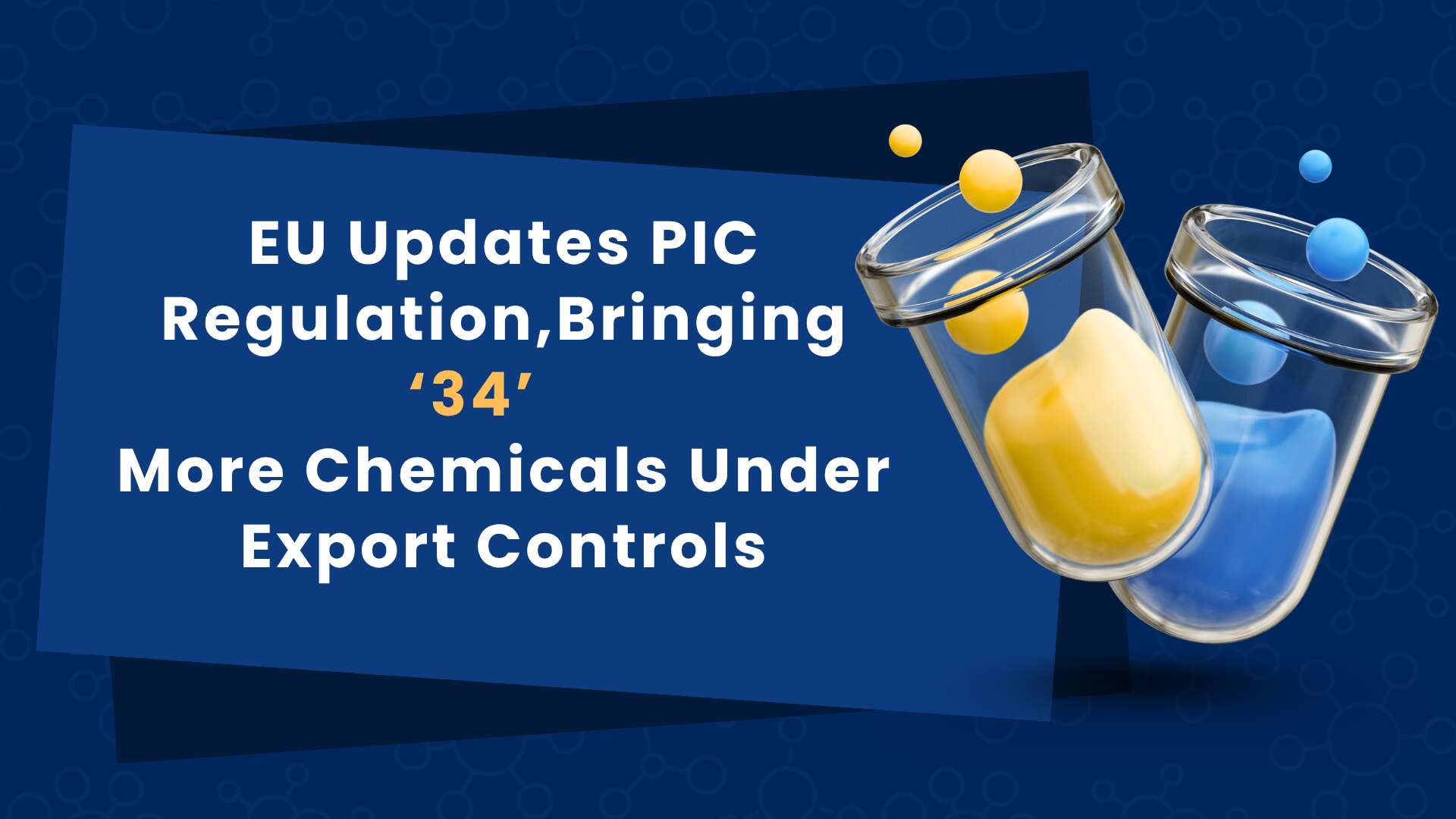
Following an update to Annex I of the EU Prior Informed Consent (PIC) Regulation, businesses exporting specific hazardous chemicals from the EU will be subject to extra notification and consent obligations starting on October 1, 2026.
Annex I of Regulation (EU) No 649/2012, also referred to as the PIC Regulation, has been revised by the European Commission to include 34 hazardous substances that are subject to particular export regulations from the EU. Eight pesticides and twenty-six industrial compounds are among the newly covered items.
The PIC Regulation sets restrictions on the import and export of some dangerous chemicals that are prohibited or severely limited in the EU. Annex I is broken up into sections, each of which has distinct requirements based on the chemicals in question.
EU Adds 34 Hazardous Chemicals to Export and Import Controls: Key requirements from 1 October 2026
Before exporting the recently classified substances, companies must adhere to the following regulations:
- Export notice: The European Chemicals Agency (ECHA) must receive notifications of chemicals specified in Part 1 of Annex I using the ePIC electronic export notification system.
- Explicit consent: Before being exported, chemicals covered by Parts 1 and 2 of Annex I must have permission from the importing nation’s authorities.
- 18 compounds subject to PIC approval: The authorities of the importing nation must give prior informed consent for 18 of the 34 recently added chemicals.
As the national PIC authority in Denmark, the Danish Environmental Protection Agency is in charge of getting approval from the appropriate PIC authorities in importing nations.
ePIC system already updated
The 34 additional chemicals have already been added to the ePIC system by ECHA. As a result, businesses can start filing export notices before the new regulations go into effect on October 1, 2026.
Regulatory impact for companies
Chemical manufacturers, exporters, importers, and regulatory compliance teams engaged in the international trade of industrial chemicals and hazardous pesticides would find the change especially pertinent. Businesses should examine their product lines to see if any exported materials are included in the recently added Annex I listings.
Businesses impacted by the move should also determine if their particular drug and destination country would require an export notification, express consent, or both.
The new regulations will take effect on October 1, 2026. Therefore, before shipments are made, companies that export potentially impacted substances should make sure that the required notifications and consent procedures are finished.