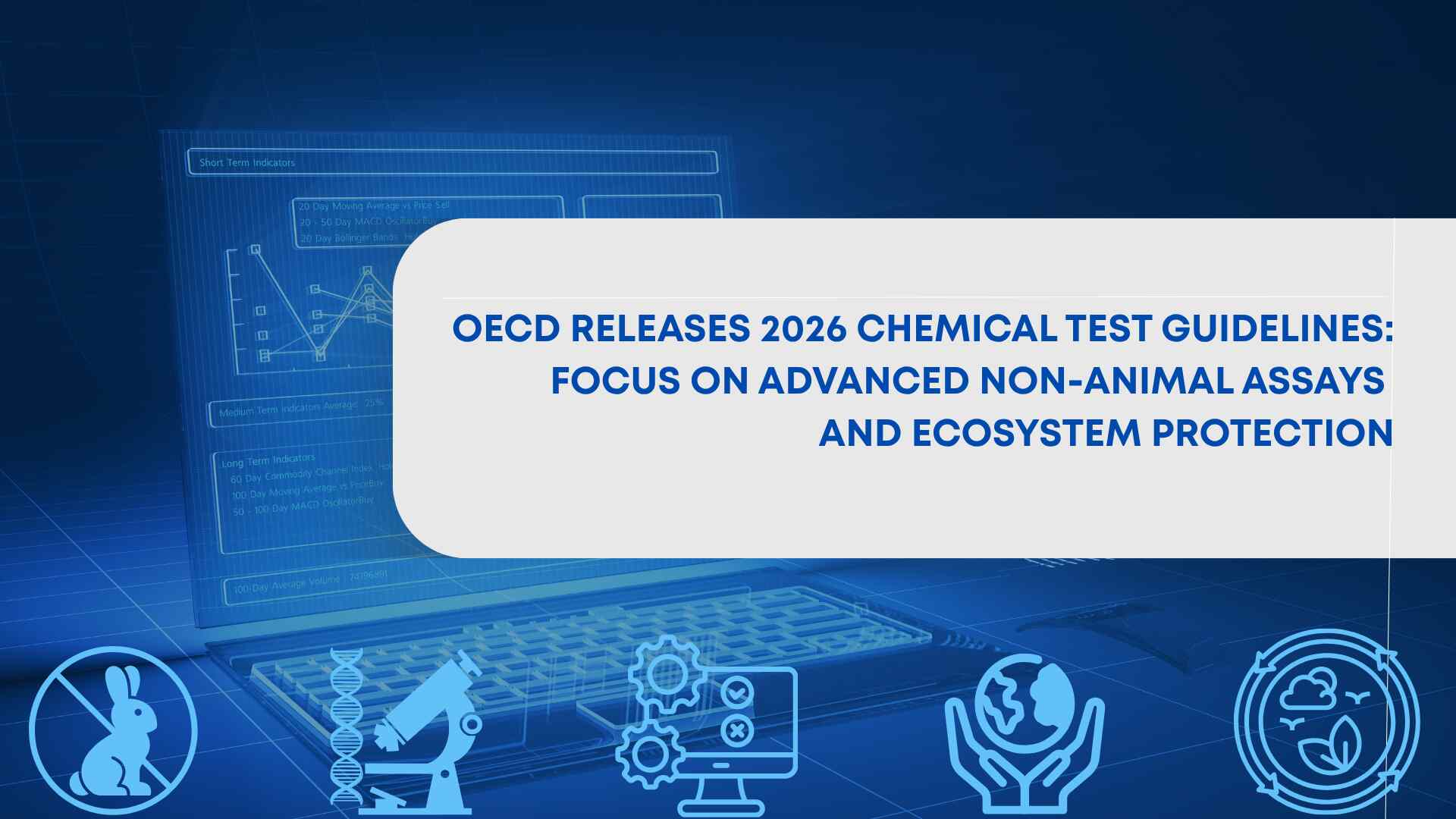
OECD Releases 2026 Chemical Test Guidelines to phase out animal testing. Explore new in vitro methods, nanomaterial rules, and updates. Read more.
The Organisation for Economic Co-operation and Development (OECD) has officially issued its 2026 update to the Guidelines for the Testing of Chemicals, incorporating 7 new, 5 updated, and 6 rectified Test Guidelines (TGs).
This release considerably broadens the worldwide safety framework, hastening the transition to non-animal testing alternatives, establishing specific standards for advanced nanomaterials, and improving environmental hazard assessments.
What makes non-animal testing so important in the future?
Non-animal testing approaches are the future because they bridge the human relevance gap by using human-derived cells and 3D tissues to precisely anticipate human biology in areas where animal models fail. These new methodologies, which include advanced computational tools and automated tests, may screen thousands of chemical compounds in days rather than years like older mammalian investigations. They give a highly precise method to safety evaluation by providing in-depth molecular insights into how hazardous reactions occur. Non-animal testing is quickly becoming the benchmark for efficient and reliable scientific innovation, backed up by global regulatory regulations to phase out animal usage.
Key 2026 Test Guidelines
1. New In Vitro Human Health Guidelines
Three new guidelines offer non-animal mechanistic perspectives on how chemicals interact with human biology:
- TG 445A (Metabolism): Analyzes CYP enzyme induction in metabolically capable human liver cells to determine toxicokinetics.
- TG 446A (Genotoxicity): uses the ToxTracker stem cell assay to differentiate between direct DNA damage and overall cellular stress.
- TG 454A (Endocrine disturbance): introduces a Human Glucocorticoid Receptor Transactivation Assay for detecting hormonal disturbance beyond the usual estrogen/androgen routes.
2. New Nanomaterial Safety Guidelines
Two new standards address the physical and environmental properties of innovative materials:
- TG 127 (Dustiness): assesses how easily nano-objects in powders become airborne during industrial handling.
- TG 322 (Environmental Fate): evaluates nanomaterials dissolution rate and solubility at different pH levels to estimate their environmental persistence.
3. New Ecotoxicity Guidelines
Two new standards offer higher-level environmental risk evaluations for essential non-target organisms:
- TG 255 (Bumblebees): A 10-day chronic oral toxicity feeding test designed for non-Apis pollinators.
- TG 256 (Earthworms): outlines field research to assess chemical impacts on wild earthworm populations in real-world scenarios.
4. Updated and Corrected Guidelines
- Updated Skin Sensitization (TG 429, TG 442D, TG 497) with more validated in vitro methodologies and defined approaches for mapping skin allergens.
- Improved cell-based testing methodologies with updates to TG 442C (protein binding) and TG 444A (immunotoxicity).
- Corrections: Six guidelines received technical fixes and editorial updates to harmonize data.
Regulatory Impact: These guidelines take effect immediately in all OECD member countries. Regulatory systems will quickly absorb these changes, requiring test facilities and chemical manufacturers to match their testing portfolios with the 2026 criteria moving forward.