
Field trials serve as a testing method to assess agricultural products, including fertilizers and bio- stimulants and biofertilizers, and crop protection solutions, before their commercial release to farmers. The data they provide consists of scientifically proven results that demonstrate how products function when tested in actual usage scenarios.
The agriculture industry requires more than a good product concept because it experiences rapid market transformations. A product achieves its intended success when it operates properly during farmers’ real-world implementation of their work. The process continues through Field trials which represent its fundamental first stage.
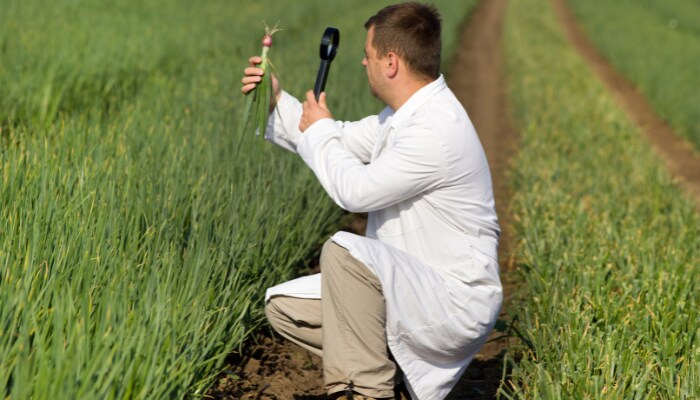
What Are Field Trials in Agriculture?
Field trials are scheduled scientific investigations conducted in agricultural fields to assess the effectiveness and safety of agricultural products and maintain their operational stability. The research trials produce quantifiable results that track essential crop performance metrics, including yield production, crop quality maintenance, pest and disease management, and total plant wellness.
The data from field trials services serves as the foundation that regulatory organizations, together with certification organizations, use to:
- Validate product performance claims
- Approve label recommendations
- Assess crop and environmental safety
Field trials operate as evidence generators that prove product claims through experimental testing.
Why Field Trials Are Essential for Agricultural Product Success
1. Regulatory Compliance and Product Registration :
The registration process for most agricultural products requires field trial data, which serves as a requirement for market authorization. The regulatory authorities perform an evaluation of trial data to confirm that products meet their predetermined safety and efficacy standards. The execution of trials with proper design and professional management works to minimize:
- Regulatory queries and objections
- Data gaps during evaluation
- Delays in approvals and renewals Shape
2. Real-World Performance Validation
Field trials evaluate product performance through testing which evaluates different crop varieties across multiple locations under different agricultural climate conditions. They help companies understand:
- Optimal application doses
- Crop-stage-specific responses
- Region-wise performance differences
The acquired knowledge from this process will serve as vital information to help achieve successful product placement in various agricultural market segments
3. Building Farmer Trust and Market Acceptance
Farmers base their trust on observations that they can understand. Field trials produce dependable data that researchers can apply for:
- Demonstration plots
- Product labels and technical literature
- Sales and extension training
The system enables scientific progress to connect with practical implementation in the field.
4. Data-Driven Marketing and Product Claims
Field trial results that are strong enable companies to make reliable marketing statements about their products, which include yield enhancement and stress resistance, and pest control abilities. Businesses can establish trust with their audience through trial-based evidence, which also defends them against future legal and regulatory problems.
Key Elements of a Successful Agricultural Field Trial
An effective field trial program typically includes:
- Regulatory-aligned trial protocols
- Selection of representative crops and locations
- Proper experimental design and controls
- Accurate data recording and statistical analysis
- Clear, audit-ready reporting
The combination of these elements produces trial data that fulfills scientific standards and follows regulatory requirements.
Auxilife’s Role in Agricultural Field Trials
The Auxilife field trials operate under two essential goals, which maintain equal importance between following regulatory requirements and achieving business targets.
Auxilife delivers complete field trial assistance, which includes all necessary support. The development of trial protocols followed both national and international guidelines, which served as references.
The management of trials that span multiple locations and different seasons needs to be performed in a coordinated manner.
- Data monitoring, statistical evaluation, and interpretation
- Preparation of regulatory-ready field trial reports
- Technical inputs to support label claims and market positioning
The team at Auxilife consists of members who bring together regulatory expertise with agricultural science experience to help businesses secure expedited market entry through new market access.
The agriculture industry requires field trials to achieve its maximum possible importance. The organization maintains agricultural products that meet effectiveness standards while ensuring safety and regulatory compliance and obtaining trust from all stakeholders, including regulators, distributors, and farmers.
Field trials demonstrate proven performance because of the skilled execution of operations that follow planned procedures. Agri-companies can transition their products from development to market readiness through successful commercialization by working with Auxilife and its experienced service providers.